 Search

September 25, 2026 • General
Estate Planning Services Help Protect Your Arizona Family’s Future
Estate planning services help you put clear instructions in place for your money, property, healthcare, and the people you trust to act for you. In Arizona, a strong plan commonly includes a will or living trust, beneficiary reviews, financial and healthcare powers of attorney, and a living will. Start by listing your assets, naming the people you want to protect, and meeting with qualified professionals to create documents that fit Arizona law.
Table of Contents
This matters at every age, but especially after 50, when retirement accounts, home equity, family responsibilities, and healthcare choices often become more complex. Without a plan, Arizona intestacy and probate rules decide who receives property and who can manage important decisions.
Safeguard Estate and Financial provides estate planning support as estate planning professionals working with legal partners, not as lawyers or attorneys. The goal is simple: help Arizona families organize their wishes and build a plan they can understand and maintain.
I am Julie Jewett, an Arizona native who has worked in the estate planning field since 2008 after beginning my career in mortgage consulting. My experience with estate planning services grew from creating my own family living trust and helping families protect what they have worked hard to build.

Comprehensive Estate Planning Services and Key Legal Documents in Arizona

Estate planning services are not reserved for the ultra-wealthy. According to Caring.com’s 2025 Wills and Estate Planning Study, only about 24% of U.S. adults have a will, and a smaller share have a living trust. Leaving your legacy to chance can place unnecessary burdens on your family during emotional moments. Understanding why estate planning is important begins with recognizing how state statutes govern property distribution and personal care.
For additional consumer education on core will and trust documents, review AARP’s estate-planning resources alongside advice tailored to your circumstances and Arizona law.
In Arizona, estate administration is governed strictly by the Arizona Revised Statutes (Title 14). When an individual passes away without an organized structure, their estate often passes through the public probate court system. Even with a valid will, assets solely in the deceased person’s name typically require probate before transfer.
Under A.R.S. § 14-3971, Arizona provides a simplified small-estate affidavit process, but only if the estate meets specific statutory thresholds: personal property must not exceed $200,000, and real property equity must not exceed $300,000 (after liens and encumbrances). For homeowners in communities across Arizona, real estate values can approach or exceed these limits, which is one reason many families consider probate avoidance planning.
| Feature | Last Will and Testament | Revocable Living Trust |
|---|---|---|
| Probate Requirement | Must pass through Arizona probate court | Can avoid probate for assets properly titled in the trust |
| Privacy Level | Public record once filed | Generally not filed with the court, though disclosure may be required in some situations |
| Incapacity Management | None (only takes effect after death) | Appoints successor trustee during lifetime incapacity |
| Asset Distribution Speed | Varies with the estate; often several months or longer | Per the trust’s terms and trustee administration |
| Cost Profile | Lower upfront cost; probate costs vary | Higher upfront cost; administration costs vary |
Core Estate Planning Services: Deciding Between Wills and Living Trusts
Choosing between a will-centered plan and a living-trust-centered plan is a foundational decision when comparing estate planning services. While a traditional will outlines your intentions and nominates a personal representative, it remains inactive until death and must go through probate court.
A revocable living trust functions as a separate legal entity designed to hold title to your assets during your lifetime. You retain full control as the initial trustee, allowing you to buy, sell, and manage your property as you always have. If you become incapacitated or pass away, your designated successor trustee steps in seamlessly without court oversight.
For maximum wealth preservation, we pair living trusts with a “pour-over will.” This safety-net document ensures any asset inadvertently left out of the trust during your lifetime is poured into the trust upon death. Beneficiary designations on financial accounts and proper deed transfers on Arizona real estate complete this framework, helping your assets flow to your chosen heirs with fewer court delays.
Healthcare Directives, Powers of Attorney, and Asset Protection Strategies
Good estate planning services protect you during your life just as much as they direct your assets after death. Life is unpredictable, and establishing legal authority before a medical crisis arises ensures your medical and financial choices remain in trusted hands.
Key documents under Arizona law include:
- Durable Financial Power of Attorney: Grants a trusted agent the authority to manage banking, pay bills, handle real estate, and oversee financial matters if you become unable to do so yourself.
- Arizona Healthcare Power of Attorney: Designates a representative to make vital medical choices on your behalf if you are incapacitated.
- Living Will: Outlines specific end-of-life wishes regarding life-prolonging treatments, artificial nutrition, and pain relief.
- Mental Healthcare Power of Attorney: An Arizona document allowing an agent to make decisions regarding inpatient behavioral or mental health care if necessary.
- HIPAA Disclosures: Authorizes medical staff to share protected health records with designated family members or decision-makers.
- Arizona Pet Trusts: Practical pet planning ensures designated caregivers receive specific funds and legal authority to care for your companion animals.
Evaluating Professional Estate Planning Services, Advisor Fees, and Tax Impact
Cost is an understandable consideration for families seeking professional estate planning services. Costs vary widely depending on complexity, asset volume, and the legal provisions involved, so ask any provider for a written description of what is included and who provides the legal services. Professional guidance can help tailor a plan to your circumstances, which generic document kits may not address.
Tax planning is another critical pillar of a well-rounded strategy. For 2026, the federal estate tax exemption amount is approximately $15 million per individual (and approximately $30 million for a married couple), adjusted for inflation. While most Arizona families will not owe federal estate taxes, capital gains taxes and asset step-up in basis remain vital factors.
Integrating your documents with proactive retirement planning helps preserve your accounts, manage required minimum distributions, and maximize the step-up in basis for inherited real estate and investments.
Maintaining Your Plan and Avoiding Costly Legal Pitfalls

Estate planning services should never leave you with a static binder on a shelf. Many families never discuss their estate plans with loved ones, which can lead to confusion and unintended disputes. Changes in family dynamics, asset values, and state laws make regular reviews necessary.
Major life events that warrant updating your plan include:
- Buying or selling real estate in Arizona.
- Marriages, divorces, or second marriages involving blended family protections.
- The birth or adoption of children or grandchildren.
- Significant shifts in financial assets or business ownership.
- Changes in health or the relocation of designated trustees, executors, or agents.
Common Mistakes in Probate and Life-Event Review Schedules
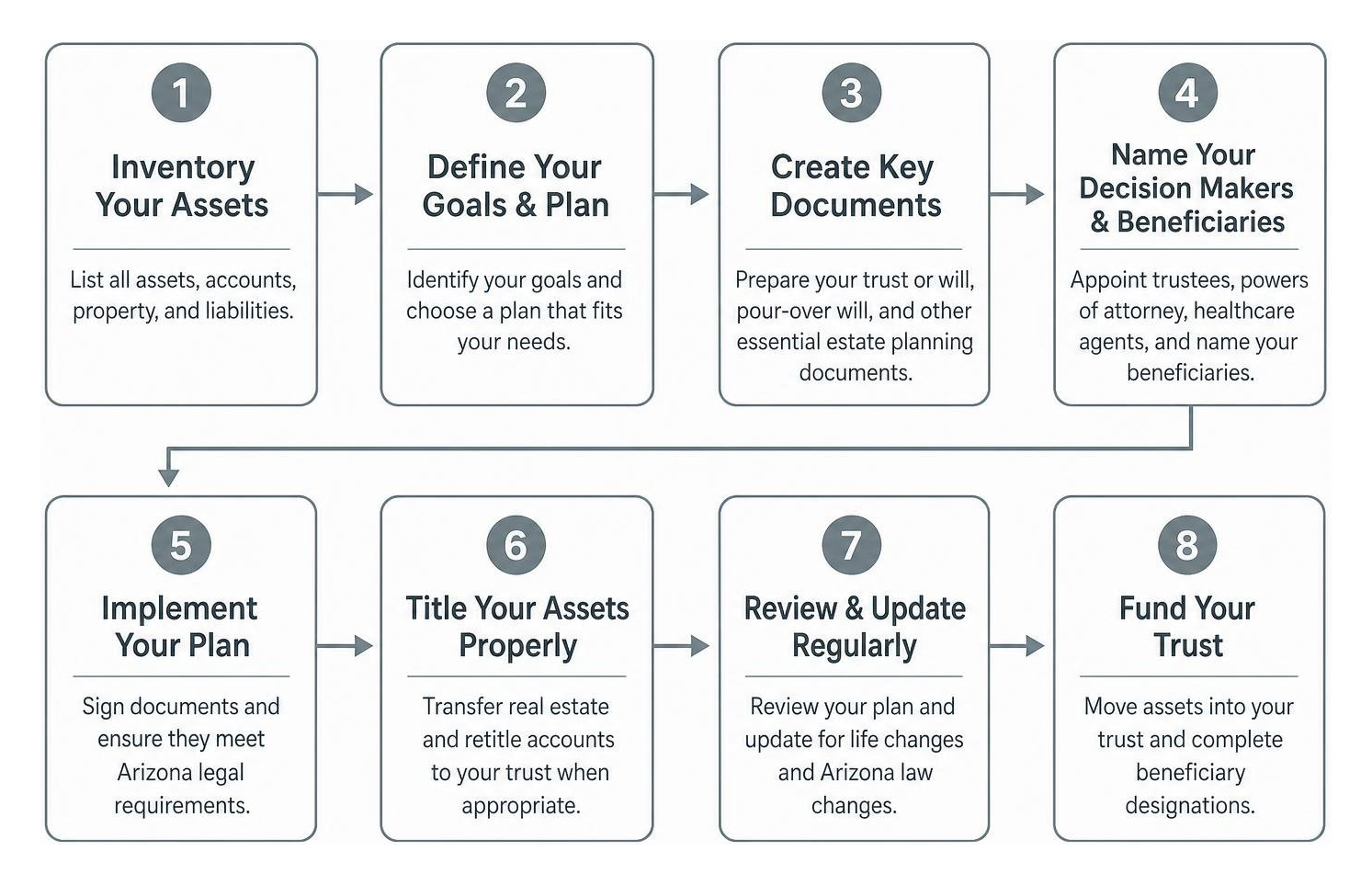
One of the most frequent mistakes we encounter is an “unfunded” living trust. Creating the legal trust agreement is only the first step; your home deed, bank accounts, and non-retirement investments must be retitled into the name of the trust. If assets remain solely in your individual name, your estate may still face probate.
Another common pitfall involves outdated beneficiary designations on life insurance and retirement accounts. Under Arizona law, beneficiary designations override instructions written in a will. If an ex-spouse or deceased relative remains listed as a direct beneficiary, the financial institution must release funds to that individual regardless of your current intentions. We recommend reviewing your plan with qualified professionals every three to five years, or immediately following any major life change.
Securing Your Future with Trusted Arizona Estate Planning Support
Safeguard Estate and Financial operates as a team of dedicated estate planning professionals working alongside legal partners—not as lawyers or attorneys—to provide structured, comprehensive guidance tailored strictly to Arizona law. We demystify estate planning services, coordinate document creation with qualified legal networks, and help you protect your hard-earned assets.
Whether you need support for Estate Planning Oro Valley, local assistance for Estate Planning Tucson, or guidance for Estate Planning Scottsdale, our focus remains on providing clarity and legal alignment.
Take the first step toward securing your family’s financial future with professional estate planning services today. Schedule an estate planning consultation with our team, or visit Safeguard Your Estate to learn how our personalized approach can deliver lasting peace of mind.
This article provides general educational information, not individualized legal, tax, or investment advice. Laws, thresholds, and program rules change, and results depend on your circumstances. Consult appropriately licensed professionals before acting.